Sales Leadership Strategies for Companies Stuck Between $1M and $20M in Revenue
The leadership approach that works at $1 million does not work at $5 million, and the approach that works at $5 million does not work at $20 million. Here is how sales leadership must evolve at each stage.
The sales leadership approach that got the company to $1 million in revenue will not get it to $5 million. The approach that got it to $5 million will not get it to $10 million. The approach that got it to $10 million will not get it to $20 million. Each revenue band requires a different leadership operating model, and the transitions between bands are where most companies stall.
The stall is not caused by market conditions or competitive pressure. It is caused by the leader continuing to operate with the model that worked at the previous stage. The founder is still closing deals at $5 million. The VP of Sales is still managing individual reps at $15 million. The leadership model that was an asset at one stage becomes a constraint at the next.
Stage One: $1M to $5M — Founder-Led Selling
At this stage, the founder is the sales engine. They are the best salesperson in the company, and they should be. The priority is defining the ideal customer profile, refining the value proposition, and closing enough deals to validate the business model. The founder should begin documenting their sales process — not to hand it off yet, but to build the foundation for the handoff. The first sales hire should be a versatile generalist who can sell, support, and learn from the founder simultaneously.
Stage Two: $5M to $10M — Process-Dependent Scaling
A thought before you continue
If what you are reading describes a problem your company is actively sitting on, a direct conversation is where it starts.
See if we're a fitAt this stage, the founder must transition from primary seller to sales leader. The sales process must be documented, trained, and enforced. The pipeline must be managed with rigor — not as a collection of opportunities, but as a system that produces predictable output. The first sales manager should be hired or developed internally. The compensation plan should be redesigned to reward the behaviors the company needs at this stage, not the behaviors that worked at the previous stage. The founder's role shifts from closing deals to coaching the people who close them.
Stage Three: $10M to $20M — Professionalized Commercial Infrastructure
At this stage, the commercial function must be professionalized. The sales process is fully documented and measured. The pipeline management rhythm is institutionalized. The sales manager has a coaching system that develops reps consistently. The compensation plan is sophisticated enough to reward multiple behaviors — new acquisition, expansion, retention, margin. The CRM is a management system, not a data repository. The founder is no longer involved in individual deals except as an escalation point for strategic relationships. The commercial engine runs without the founder.
The companies that successfully navigate the revenue stages are not the ones with the best products or the best markets. They are the ones whose leadership model evolves at each transition. The leader who can sell at $1 million, build process at $5 million, and professionalize at $10 million is the leader who builds a company that reaches $20 million and beyond.
Work with Jeff
If any of this mirrors where your business is right now, let's have a direct conversation about it.
Pick a time that works for you. It's a direct 30-minute conversation - no pitch, no follow-up sequence.
Schedule a free call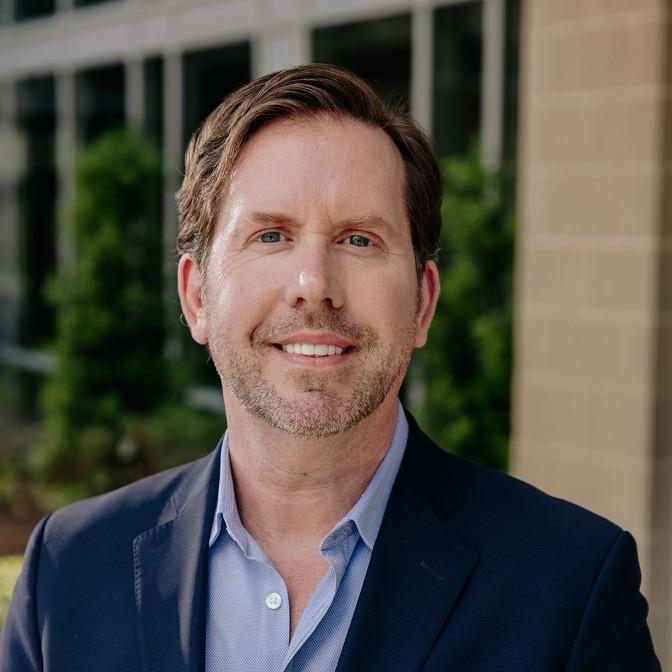
Jeff Bounds
Revenue growth advisor to growth-stage founders and CEOs.
More in Sales Leadership
Other Sales Leadership articles you may find useful
Building a Sales Accountability System That Drives Results
Accountability is not a conversation about missed numbers. It is a system that makes expectations explicit, progress visible, and consequences predictable. Here is how to build one that works.
How to Create a High-Performance Sales Culture
Culture is not ping pong tables and team happy hours. It is the set of shared expectations, behaviors, and standards that determine what is celebrated, what is tolerated, and what is not acceptable. Here is how to build one intentionally.
How Founders Can Scale Revenue Without Becoming the Head Salesperson
The founder who is still closing every major deal at $8 million in revenue has not built a company. They have built a job. Here is how to transfer the commercial capability from the founder to the team.
Stay Sharp
GTM strategy, sales psychology, and revenue frameworks - straight to your inbox.
No generic marketing content. No pitch emails. Practical thinking on sales execution, marketing alignment, and go-to-market strategy for growth-stage founders. Roughly twice a month.