How to Grow My Business: The Difference Between Busy Growth and Real Growth
Growth is not the same as scale. Most business owners confuse activity with progress, and the result is a business that gets bigger without getting better. Here is how to tell the difference, and what to do about it.
The most common question I get from business owners is not how to make more money. It is how to grow their business. The question sounds straightforward, but it masks a confusion that costs more than most owners realize. Growth is not a single thing. It is a category that contains at least three distinct outcomes: more revenue, more profit, and more capacity. Most owners pursue all three at once without knowing which one they actually need. The result is a business that is busier, more complex, and not necessarily more valuable.
A business can grow in revenue while shrinking in profit. It can grow in headcount while declining in efficiency. It can grow in market presence while eroding in customer quality. These are not edge cases. They are the most common outcomes of growth without structure. The business owner who wants to grow must first answer a more precise question: grow in what direction, by what measure, and toward what outcome? Until that question is answered, every growth effort is a gamble.
Busy growth is what happens when you add more of what you are already doing. Real growth is what happens when you change the structure of what you are doing so that each unit of input produces more output than it did before. The difference is not the amount of activity. It is the efficiency of the system.
The Three Types of Growth and Why They Require Different Strategies
Revenue growth, profit growth, and capacity growth are not the same thing, and they do not always move together. A company that doubles revenue by adding twice the headcount and twice the infrastructure has grown in revenue but not in efficiency. A company that cuts costs to increase profit has grown in margin but not in capability. A company that invests in systems to handle more volume without proportional cost increases has grown in capacity - and that is the only form of growth that compounds.
- Revenue growth: More money coming in. This is the most visible form of growth and the one most owners chase. It is also the most dangerous if it is not paired with the other two types, because revenue without profit and without capacity creates a business that is bigger but less stable.
- Profit growth: More money staying in the business after all costs. This is the most underrated form of growth because it does not feel as exciting as revenue. But profit growth is what funds reinvestment, weatherproofs the business against downturns, and creates the capital to acquire or hire.
- Capacity growth: The ability to serve more customers, more efficiently, with the same or fewer resources. This is the form of growth that makes all other growth sustainable. Capacity growth comes from systems, process, technology, and team development. It is the only form of growth that does not require continuous input increases to produce continuous output increases.
Why Most Business Growth Efforts Stall After the First Push
The first phase of growth in any business is usually organic. The founder has a product or service that works. Word spreads. Customers arrive. Revenue increases. The owner works harder, hires a few people, and keeps the momentum going. This phase can last for years, and it feels like growth. But it is not scalable growth. It is founder-driven growth, and it has a natural ceiling: the founder's personal capacity.
The stall happens when the founder's capacity becomes the bottleneck. The owner is still involved in every decision, every customer relationship, every problem that escalates. The team is larger but not more autonomous. The processes are informal and dependent on the owner's memory and judgment. Revenue is flat or growing slowly because the system cannot scale beyond the person who built it. Most owners interpret this stall as a market problem or a competition problem. It is almost always a structural problem.
The businesses that break through the founder ceiling are not the ones where the founder works harder. They are the ones where the founder stops being the system and starts building the system.
The Structural Moves That Enable Real Growth
Real growth requires structural changes that most owners resist because they feel like giving up control. Delegating authority, documenting processes, hiring people who are better than the founder at specific functions, and building systems that do not require the founder's daily involvement. These are not easy changes. They are the changes that separate businesses that grow from businesses that stay stuck.
- 1Define the one thing that only the founder can do. Not the ten things the founder currently does. The one thing. Everything else is a candidate for delegation. For most founders, the only truly irreplaceable function is setting the direction and holding the standard. Operations, sales, delivery, and customer management can all be transferred to people who specialize in them.
- 2Build the decision architecture. Most founders are slow to delegate because they fear bad decisions. The fix is not to keep making every decision. It is to build the criteria by which others can make decisions without the founder's involvement. Decision frameworks, escalation rules, and clear authority boundaries replace the need for the founder to be in every conversation.
- 3Hire for the next stage, not the current one. The people who helped you build the business from zero to one are not always the right people to take it from one to ten. This is not disloyalty. It is evolution. The business needs different capabilities at different stages, and the team must evolve to match.
- 4Measure leading indicators, not just lagging ones. Revenue and profit are lagging indicators. They tell you what happened. Leading indicators tell you what is about to happen: pipeline velocity, customer satisfaction trends, employee engagement scores, and process efficiency metrics. A business that measures only output is flying blind about future output.
- 5Invest in systems before you need them. Most owners invest in systems reactively, after the business has already outgrown the current setup. The companies that grow smoothly are the ones that invest in capacity before the demand arrives. This requires forecasting and discipline, and it pays off in the ability to absorb growth without breaking.
A thought before you continue
If what you are reading describes a problem your company is actively sitting on, a direct conversation is where it starts.
See if we're a fitGrowth Without Profit Is a Trap
One of the most dangerous patterns in business growth is the pursuit of revenue at the expense of profit. The owner sees competitors growing faster and feels pressure to match them. They cut prices to win deals. They add services that cost more than they generate. They hire ahead of revenue and hope the revenue catches up. These decisions feel like growth investments. They are often survival bets.
The businesses that survive long-term are the ones that maintain profitability even while growing. Profit is what creates the buffer to weather setbacks. It is what funds the investments that create capacity. It is what makes the business attractive to buyers, lenders, and partners. A business that grows revenue while eroding profit is not becoming more valuable. It is becoming more fragile.
Growth is not the goal. Sustainable, profitable growth is the goal. A business that grows in a way that makes it weaker is not growing. It is inflating.
The One Question That Determines Whether You Should Grow Right Now
Before launching any growth initiative, the business owner should answer one question with complete honesty: is the business currently stable, profitable, and well-run at its current size? If the answer is no, growth will make every existing problem bigger. A business with operational issues, cash flow problems, or team dysfunction does not need more customers. It needs better fundamentals.
The best time to grow is when the current system is working well and the constraint is simply that demand exceeds capacity. That is the moment when adding capacity produces a proportional return. Growing when the system is already stressed is like adding floors to a building with a cracked foundation. It might stand for a while. It will not stand forever.
Real growth is not about doing more. It is about building a system that makes more possible. The business owners who grow consistently are the ones who invest in the structure first, then add the volume. The ones who struggle are the ones who add volume first and hope the structure catches up. It rarely does.
Work with Jeff
If any of this mirrors where your business is right now, let's have a direct conversation about it.
Pick a time that works for you. It's a direct 30-minute conversation - no pitch, no follow-up sequence.
Schedule a free call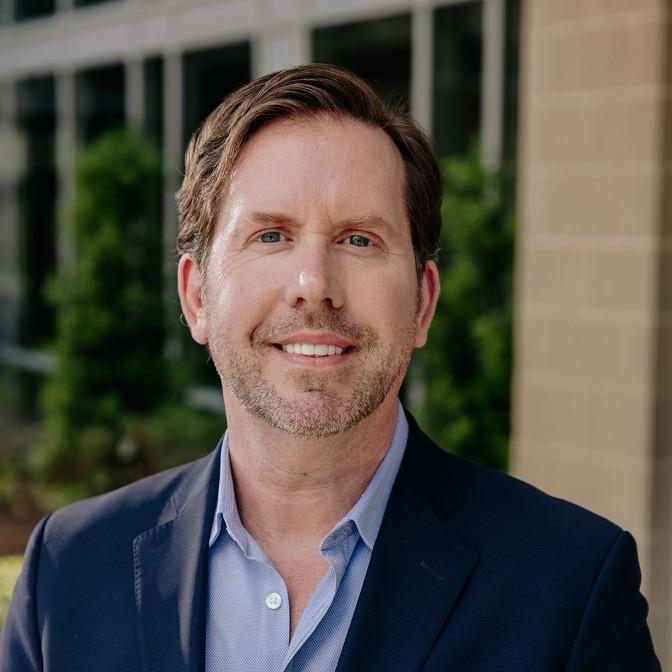
Jeff Bounds
Revenue growth advisor to growth-stage founders and CEOs.
More in Business Growth
Other Business Growth articles you may find useful
What a Business Growth Consultant Actually Does (And What They Should Never Do)
The term 'business growth consultant' is so broad it has become almost meaningless. Here is what separates the consultants who create real value from the ones who sell frameworks and disappear.
How to Scale a Business: The Architecture of Sustainable Growth
Scaling is not the same as growing. Growth is adding more. Scaling is adding more without adding proportionally more. The difference is systems, and the companies that scale are the ones that build them deliberately.
Why Is My Business Not Growing? The Diagnostic Most Owners Skip
When growth stalls, most owners blame the market, the competition, or the team. The real answer is usually closer to home, and it is almost always structural. Here is how to find it.
Stay Sharp
GTM strategy, sales psychology, and revenue frameworks - straight to your inbox.
No generic marketing content. No pitch emails. Practical thinking on sales execution, marketing alignment, and go-to-market strategy for growth-stage founders. Roughly twice a month.