How to Scale a Business: The Architecture of Sustainable Growth
Scaling is not the same as growing. Growth is adding more. Scaling is adding more without adding proportionally more. The difference is systems, and the companies that scale are the ones that build them deliberately.
The question 'how to scale a business' is one of the most misunderstood in entrepreneurship. Most people who ask it actually want to know how to grow. They want more revenue, more customers, more market share. Scaling is something else entirely. Scaling is the ability to increase output without a proportional increase in input. A business that grows by doubling its team to double its revenue is growing. A business that doubles its revenue with the same team is scaling. The difference is the architecture of the business, and the architecture is what most founders never build.
The reason scaling is hard is that it requires the founder to stop doing the things that made the business successful in the first place. The founder who built the business by being the best salesperson, the best operator, and the best problem-solver now has to become the best system builder. That is a different skill set, a different identity, and a different daily routine. Most founders never make the shift. They keep doing what they are good at, and the business plateaus because the founder is the bottleneck.
Growth is a function of effort. Scaling is a function of design. The businesses that scale are not the ones where the founder works harder. They are the ones where the founder designs the system so that the business works harder without the founder in every part of it.
The Four Systems Every Scalable Business Must Build
There are four systems that make scaling possible. Most businesses have one or two of them working well. The businesses that scale have all four. The systems are not theoretical. They are the operational infrastructure that determines whether the business can absorb more demand without breaking.
- The customer acquisition system: A repeatable, documented process for generating qualified leads and converting them into customers. Not a series of tactics that the founder executes. A system that operates with or without the founder's direct involvement. This system includes the marketing engine, the sales process, the qualification criteria, and the conversion mechanics.
- The delivery system: A standardized process for delivering the product or service that produces consistent quality at increasing volume. The delivery system is what most businesses neglect first, and it is what breaks first when growth accelerates. It includes the operational workflow, quality standards, capacity planning, and the team structure that executes the work.
- The financial system: A cash flow, pricing, and margin management system that ensures the business remains profitable as it grows. Growth without financial discipline is a well-funded path to insolvency. The financial system includes pricing architecture, cost controls, cash flow forecasting, and capital allocation.
- The people system: A hiring, training, and development system that builds the team's capability faster than the business's demands increase. The people system is what determines whether the business can grow without the founder's personal involvement in every function. It includes recruiting, onboarding, performance management, and succession planning.
Why Scaling Fails: The Most Common Mistakes
Most scaling efforts fail for one of three reasons. The founder tries to scale before the business model is proven. The founder tries to scale without building the systems first. Or the founder tries to scale while continuing to operate the business the same way they did before. Each of these mistakes is common, and each is avoidable.
- 1Scaling before the model is proven: A business that has not yet found a repeatable way to acquire customers, deliver value, and retain revenue is not ready to scale. Scaling a broken model is like adding more floors to a building with a weak foundation. The structure gets taller but less stable. The work of the early stage is to prove the model. The work of the growth stage is to scale it.
- 2Scaling without building systems: The founder who adds customers without building the delivery, financial, and people systems to serve them is not scaling. They are accumulating technical debt. The delivery team falls behind. Quality drops. Customers churn. The founder works harder to fix the problems. The business feels like it is growing, but it is actually becoming less sustainable.
- 3Operating the same way at a larger size: The decisions that made sense at $1M do not make sense at $10M. The founder who manages a $10M business the same way they managed a $1M business is the bottleneck. The team that worked informally at ten people cannot operate informally at fifty. The processes that were charmingly scrappy at the beginning are chaotically insufficient at scale.
The Scaling Sequence: What to Build First, Second, and Third
The order in which you build the systems matters. The wrong sequence creates bottlenecks that slow or stop growth. The right sequence creates a compounding effect where each system makes the next one easier to build.
A thought before you continue
If what you are reading describes a problem your company is actively sitting on, a direct conversation is where it starts.
See if we're a fit- 1First, prove the unit economics. Before you scale anything, know that you can acquire a customer, deliver the value, and retain the revenue at a margin that makes sense. The unit economics are the proof that the business model works. Without that proof, scaling is just guessing with more money.
- 2Second, build the delivery system. The delivery system is the constraint that most founders ignore because they are focused on revenue. But if you cannot deliver what you sell at scale, the revenue you generate will destroy your reputation faster than it builds your business. Standardize the process, document the quality standards, and build the capacity to handle more volume than your current demand.
- 3Third, build the customer acquisition system. Once the delivery system is ready, build the marketing and sales engine that generates demand. The reason this comes third is that the customer acquisition system is the easiest to adjust. The delivery system is the hardest to fix once it is broken. Build the harder system first, then add the demand.
- 4Fourth, build the people system. The people system is what enables the business to grow without the founder. Hire for the next stage, not the current one. Train people before you need them. Build the culture and the performance standards that make the team self-directing.
- 5Fifth, build the financial system. The financial system is the last to build because it is the easiest to retrofit. But it is the most important to maintain. The financial system ensures that the business remains profitable, liquid, and investable as it grows. It includes pricing discipline, cost controls, and capital allocation decisions.
The companies that scale successfully are not the ones that grow the fastest. They are the ones that build the systems in the right order, so that each stage of growth is supported by the infrastructure that makes it sustainable.
The Founder Identity Shift That Scaling Requires
The hardest part of scaling is not the systems. It is the founder. The founder who built the business by being the best at everything now has to become the person who builds the system that makes other people the best at those things. That is an identity shift that most founders resist. It feels like giving up control. It feels like becoming less central. It feels like the business is becoming something that does not need them.
That feeling is both true and false. The business is becoming something that does not need the founder in every part of it. That is the definition of scaling. But the founder is not becoming less central. They are becoming more central in a different way. They are the architect of the system. They are the holder of the standard. They are the person who sees around corners and makes the decisions that shape the business's future. The role is different. It is not smaller. And it is the only role that makes scaling possible.
The Practical Starting Point
If you are trying to scale your business, start with one question: what is the one thing that would break if you doubled your revenue tomorrow? That is the constraint. That is the system you need to build first. It might be delivery capacity. It might be cash flow. It might be team capability. It might be the founder's time. Whatever it is, identify it and build the system to remove it before you add the revenue.
Scaling is not a mystery. It is a sequence of deliberate decisions to build the systems that make growth sustainable. The founders who scale are the ones who make those decisions before they are forced to by the business's demands. The ones who do not scale are the ones who wait until the system is already breaking, then try to fix it while the business is growing. That is the hardest way to scale, and it is the way most founders try. Do not be most founders.
Work with Jeff
If any of this mirrors where your business is right now, let's have a direct conversation about it.
Pick a time that works for you. It's a direct 30-minute conversation - no pitch, no follow-up sequence.
Schedule a free call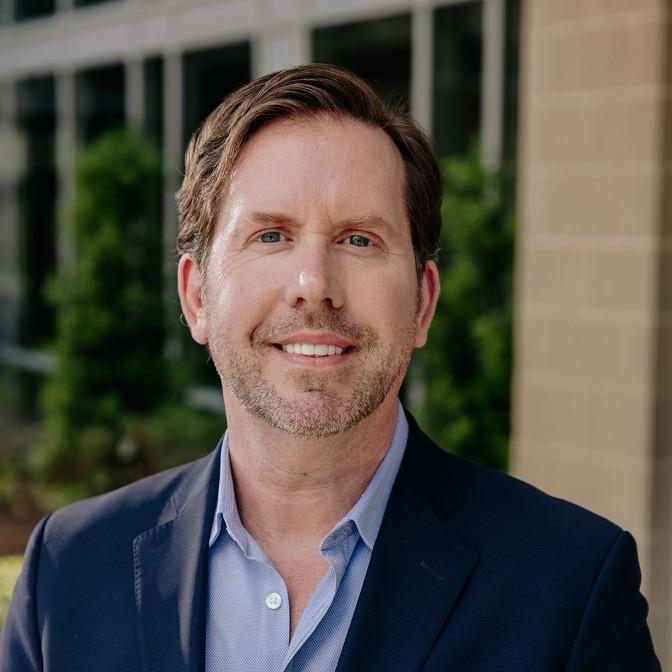
Jeff Bounds
Revenue growth advisor to growth-stage founders and CEOs.
More in Business Growth
Other Business Growth articles you may find useful
How to Grow My Business: The Difference Between Busy Growth and Real Growth
Growth is not the same as scale. Most business owners confuse activity with progress, and the result is a business that gets bigger without getting better. Here is how to tell the difference, and what to do about it.
What a Business Growth Consultant Actually Does (And What They Should Never Do)
The term 'business growth consultant' is so broad it has become almost meaningless. Here is what separates the consultants who create real value from the ones who sell frameworks and disappear.
Why Is My Business Not Growing? The Diagnostic Most Owners Skip
When growth stalls, most owners blame the market, the competition, or the team. The real answer is usually closer to home, and it is almost always structural. Here is how to find it.
Stay Sharp
GTM strategy, sales psychology, and revenue frameworks - straight to your inbox.
No generic marketing content. No pitch emails. Practical thinking on sales execution, marketing alignment, and go-to-market strategy for growth-stage founders. Roughly twice a month.